
Description
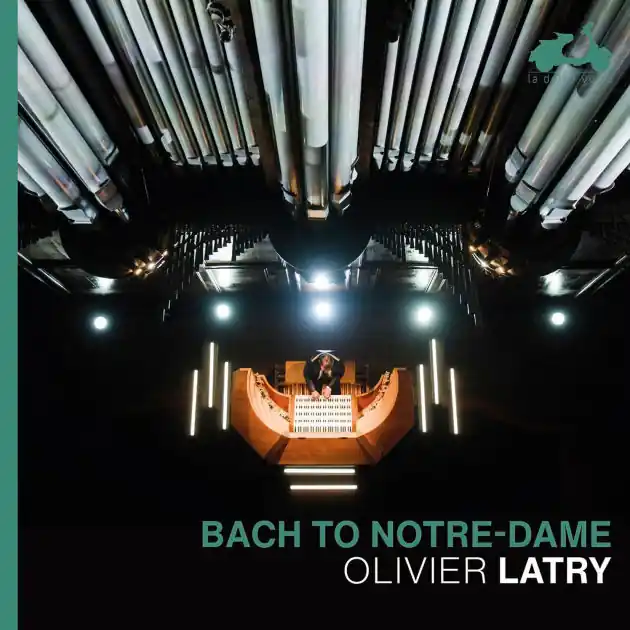
In the ongoing celebrations of the reopening of Notre-Dame-de-Paris, save one corner for this release by its resident organist Olivier Latry, decked out with some futuristic photography. He plays Bach pieces that are mostly forever favorites on the cathedral’s mighty Cavaillé-Coll organ, but this is not an organ pops release. This organ is a relatively modern instrument (1868) and is entirely different from the ones Bach had in mind. It wouldn’t be going too far to say that this is an entirely inauthentic performance of Bach, but that is what makes it interesting. Latry makes a strong case for his approach, and the physical album is recommended. “One cannot and must not fight against the past, but on the contrary assimilate it, the better to derive inspiration from it and then find one’s personal path,” he says, adding that he is aware of the phenomenon of playing quintessentially Protestant music at a world icon of Catholicism. So, how does it work? Latry notes that some said he avoided polyphonic Bach, but that it wasn’t true; he opens with the Ricercare from the Musikalisches Opfer, BWV 1079, one of the most intricate pieces of polyphony in existence. It would be better to say that he deploys Bach in such a way as to serve the organ at hand, and he does quite well at this. The big Toccata and Fugue in D minor, BWV 566, is terrific, and enjoy the uniquely murky quality of the Fantasia from the Fantasia and Fugue in G minor, BWV 542. It is certainly of interest to explore what happens when two traditions collide, and while one wouldn’t always want to hear Bach this way (the final Passacaglia in C minor, BWV 582, doesn’t quite work in this context), the results are never without interest. ~ James Manheim